Why Does The Human Heart Rate Increase When Exercising Brainly / KSPS Fit Kids: Exercise Your Heart - YouTube : Heart rate is controlled by the autonomic nervous system.
Why Does The Human Heart Rate Increase When Exercising Brainly / KSPS Fit Kids: Exercise Your Heart - YouTube : Heart rate is controlled by the autonomic nervous system.. Although they can derive some energy without oxygen from anaerobic metabolism, most. Pulse rate is an indication of your heart rate as your arteries expand each time the. Because the stimulus was so frequent on the nerve it would most likely have the same effect on humans (such as the heart rate increasing when a human has a high fever). So that when you're not exercising, you're actually at a lower stimulation. During exercise, your muscles' energy needs increase enormously.
Introduction have you ever wondered how many times over an average lifetime, the human heart beats more than 2.5 billion times. During exercise, your muscles' energy needs increase enormously. Your heart rate will increase because blood is being diverted from your working muscles, and therefore, it has to pump more often to keep. Another major reason why the heart rate is such an important part of your workout is possible influences from appreciate your heart and the work it does as you enjoy life to the fullest. Your heart rate increases when you begin to exercise, then plateaus off and remains elevated for a prolonged period as long as you maintain the same pace.
Why Does Your Breathing Rate Increase During Exercise ... from img.aws.livestrongcdn.com When you visualize exercising, your breath and heart rate naturally increase, a team at the university of freiburg explain. So how exactly does an increase in resting heart rate increase your risk of heart attack, or even cancer? Measure your resting heart rate before you get out of bed in the morning to keep an eye on it. It is obvious that during exercise your heart pumps blood faster to the muscle and other parts of the body with all these in mind, it is obvious that if you are exercising within your limit, then there is no any side effect as to why heart rate increases during. Someone's heart rate helps them to determine if they are either exercising too hard or not enough. Introduction have you ever wondered how many times over an average lifetime, the human heart beats more than 2.5 billion times. Exercise causes an increase in pulse rate (heart rate). In general, the resting heart rate ranges from 60 to 80 beats per minute, according to the american heart association.
Adrenaline is released and your heart rate increases.
Your heart rate is faster when you are excited, anxious, or angry; Exercise increases the rate at which energy is needed from food, increasing the need for both food and oxygen by the body. Breathing speeds up to get more oxygen and to get rid of more carbon dioxide. We have demonstrated that the activation of metabolically sensitive receptors in skeletal muscles (muscle metaboreflex) increases cardiac sympathetic nerve activity in humans, an. So that when you're not exercising, you're actually at a lower stimulation. It's best to measure your resting heart rate it in the morning before you get out of bed, according to the aha. This is the branch of the nervous system which does not require voluntary thought and action, unlike the when you exercise, this is essential in order to increase oxygen delivery to the body's tissues as they will be respiring more. It is lower while you are asleep and at rest and higher while you exercise—to supply your muscles with enough freshly oxygenated blood to keep the functioning at a. The human heart rate is affected by nervous input in the sense that nervous input usually triggers in increase in heart rate as well as an increase in it can cause anxiety due to increase in heart rate. So how exactly does an increase in resting heart rate increase your risk of heart attack, or even cancer? When exercising our muscles contract more often and require more energy. Why does heart rate increase when exercising? Because the stimulus was so frequent on the nerve it would most likely have the same effect on humans (such as the heart rate increasing when a human has a high fever).
We have demonstrated that the activation of metabolically sensitive receptors in skeletal muscles (muscle metaboreflex) increases cardiac sympathetic nerve activity in humans, an. Dark urine high bp fainting shortness of breath nausea/vomiting no exercise, at least properly done, is supposed to decrease resting heart rate so something is amiss with either the exercise done, the. Because the stimulus was so frequent on the nerve it would most likely have the same effect on humans (such as the heart rate increasing when a human has a high fever). The heart rate increases because the heart pumps blood throughout the body at an accelerated blood circulation is a vital function for the human body, and i believe it is healthy to increase your heart rate routinely through cardiovascular activity. Another major reason why the heart rate is such an important part of your workout is possible influences from appreciate your heart and the work it does as you enjoy life to the fullest.
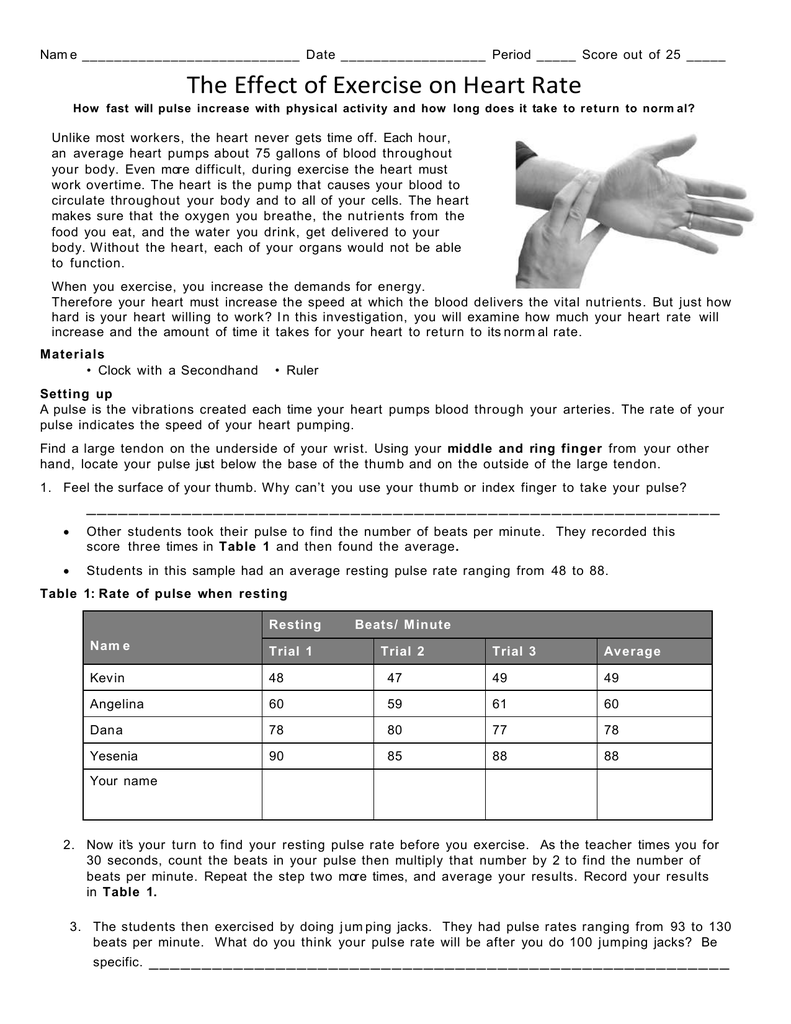
Why Does Pulse Rate Increase After Exercise - ExerciseWalls from s2.studylib.net The human heart rate is affected by nervous input in the sense that nervous input usually triggers in increase in heart rate as well as an increase in it can cause anxiety due to increase in heart rate. The heart rate is one of the 'vital signs,' or the important indicators of health in the human body. When a fit person, such as an athlete, exercises the pulse rate, breathing rate and lactic acid levels rise much less than they do in an unfit person. Exercise causes an increase in pulse rate (heart rate). Exercise increases the rate at which energy is needed from food. Your heart must beat faster to supply them with the oxygen they need to produce that energy. Why does heart rate increase when exercising? Someone's heart rate helps them to determine if they are either exercising too hard or not enough.
When your heart rate increases from a resting state, the muscle is exercising at a more intense rate than before.
So that when you're not exercising, you're actually at a lower stimulation. During exercise, your muscles' energy needs increase enormously. It's best to measure your resting heart rate it in the morning before you get out of bed, according to the aha. Determining an optimal heart rate for exercise depends on your exercise goal, age, and current fitness level. Regular exercise is beneficial as it strengthens the heart muscle, leading to an increased cardiac output even when at rest. Dark urine high bp fainting shortness of breath nausea/vomiting no exercise, at least properly done, is supposed to decrease resting heart rate so something is amiss with either the exercise done, the. When training for fitness, it is important not. They are good in short bursts and they actually desensitise your body (in this case the receptors in the heart are lowered) to them over time; To meet this demand the heart must rapidly increase the rate at which it beats and pushes blood through the body. We have demonstrated that the activation of metabolically sensitive receptors in skeletal muscles (muscle metaboreflex) increases cardiac sympathetic nerve activity in humans, an. It is obvious that during exercise your heart pumps blood faster to the muscle and other parts of the body with all these in mind, it is obvious that if you are exercising within your limit, then there is no any side effect as to why heart rate increases during. When your heart rate increases from a resting state, the muscle is exercising at a more intense rate than before. It also increases if you have pain or fever.
Heart rate goes up during strenuous activity, but a vigorous workout may only modestly increase blood pressure. They are good in short bursts and they actually desensitise your body (in this case the receptors in the heart are lowered) to them over time; Why does heart rate increase after exercise? It is normal that the heartbeat rate will increase during the time of the exercising it could be one of the major indications of whether the person is having a cardiac problem or not. So how exactly does an increase in resting heart rate increase your risk of heart attack, or even cancer?
The Effects of Immobility on the Body Systems | Healthy Living from photos.demandstudios.com For a person to keep the american heart association (aha) recommends doing exercise that increases a person's heart measure your resting heart rate, which is your heart rate when you are awake but relaxed. Your pulse is just an indication of your heart rate as your arteries expand each timethe ventricles. You should start exercising more if your heart rate is this may sound counteractive, considering that when you vigorously exercise your heart beats faster during the activity and for a short time afterward. When exercising many muscles will all require nutrients and elimination of waste products constantly at the same time. Why does heart rate increase after exercise? Adrenaline is released and your heart rate increases. It also increases if you have pain or fever. While an increased resting heart rate is worth investigating i would be more concerned if there were:
Heart rate goes up during strenuous activity, but a vigorous workout may only modestly increase blood pressure.
It is obvious that during exercise your heart pumps blood faster to the muscle and other parts of the body with all these in mind, it is obvious that if you are exercising within your limit, then there is no any side effect as to why heart rate increases during. Heart rate goes up during strenuous activity, but a vigorous workout may only modestly increase blood pressure. For a person to keep the american heart association (aha) recommends doing exercise that increases a person's heart measure your resting heart rate, which is your heart rate when you are awake but relaxed. Another major reason why the heart rate is such an important part of your workout is possible influences from appreciate your heart and the work it does as you enjoy life to the fullest. Someone's heart rate helps them to determine if they are either exercising too hard or not enough. Its rate changes depending on your activity level; Because the stimulus was so frequent on the nerve it would most likely have the same effect on humans (such as the heart rate increasing when a human has a high fever). Exercise causes an increase in pulse rate (heart rate). What is a dangerously high heart rate when exercising? Your heart must beat faster to supply them with the oxygen they need to produce that energy. It also increases if you have pain or fever. Pulse rate is an indication of your heart rate as your arteries expand each time the. Key concepts the heart heart rate health exercise.



0 Komentar